

 English
 Español


Industry News
Home / News / Industry News / How Does Plastic Injection Molding Work? The Full Process and Design Basics
Content
When an engineer releases a plastic syringe barrel, a connector housing, or a dashboard trim panel for production, the part usually reaches its final shape in a machine that looks more like a precision instrument than a press. Plastic injection molding works by melting thermoplastic pellets, injecting the molten polymer under high pressure into a closed steel mold, and cooling it until the part can be ejected as a solid component. The complete cycle typically takes 20 to 60 seconds, and one mold can produce hundreds of thousands of identical parts. That speed, accuracy, and repeatability make injection molding the standard production process for plastic parts in automotive, medical, electronic, and appliance manufacturing.
Injection molding does not stretch heated plastic the way vacuum forming does, and it does not inflate a parison like blow molding. It forces molten polymer into a steel cavity that is the negative image of the finished part, so the mold reproduces thin ribs, fine textures, and small holes as long as the steel is machined to match.
Pressure exists to overcome flow resistance. Molten plastic is viscous, and thin walls or long flow paths create back pressure. If injection pressure or mold temperature is too low, the melt freezes before the cavity fills and the part comes out incomplete, a defect called a short shot.
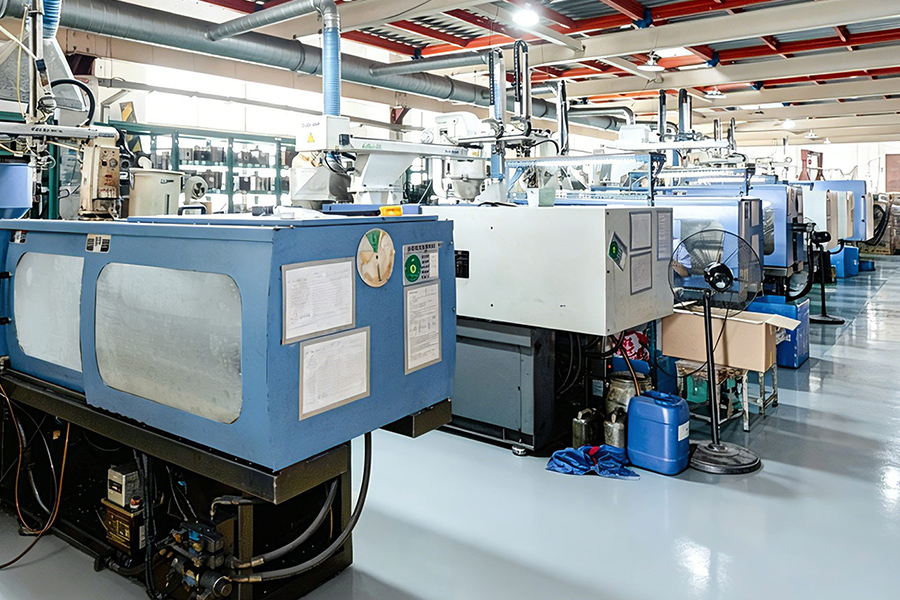
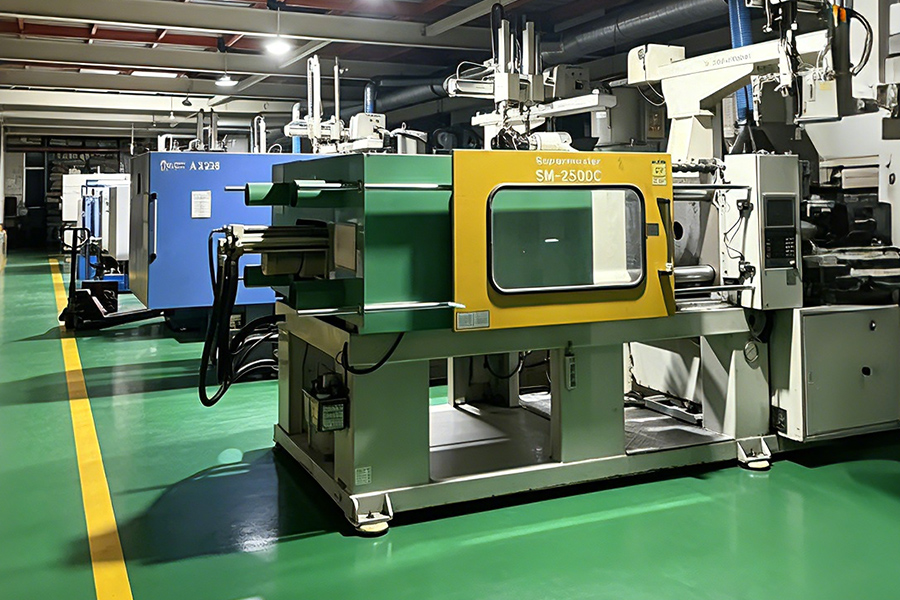
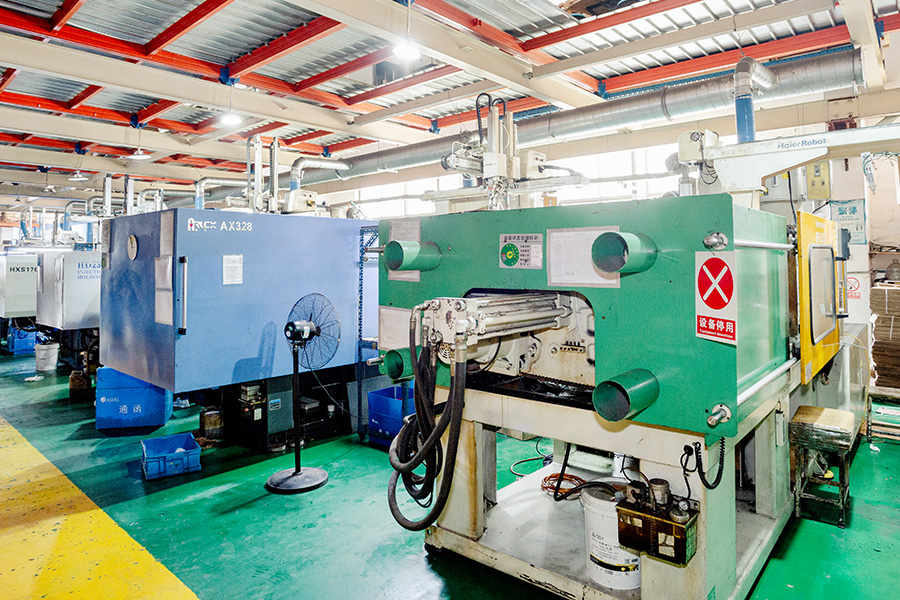
An injection molding machine has two halves with different jobs. The injection unit melts the plastic and delivers it; the clamping unit opens and closes the mold and holds it shut during injection.
| Assembly | Key components | Primary function |
|---|---|---|
| Injection unit | Hopper, heated barrel, reciprocating screw, nozzle | Melts pellets, mixes the melt, and injects it into the mold under pressure |
| Clamping unit | Platens, tie bars, toggle or hydraulic system, ejector mechanism | Opens and closes the mold, holds it shut against injection pressure, and ejects the part |
Plastic granules drop from the hopper into a heated barrel, where a rotating screw pushes them forward while barrel heaters and screw friction melt the polymer. When enough melt has collected in front of the screw, the screw stops and moves forward as a plunger, driving the melt through the nozzle and into the mold.
Clamping force must exceed the separating force created by injection pressure on the cavity's projected area; otherwise the mold opens slightly and flash forms. Machines are therefore rated by clamping tonnage, from about 30 tons for small precision parts to more than 1,000 tons for large housings.
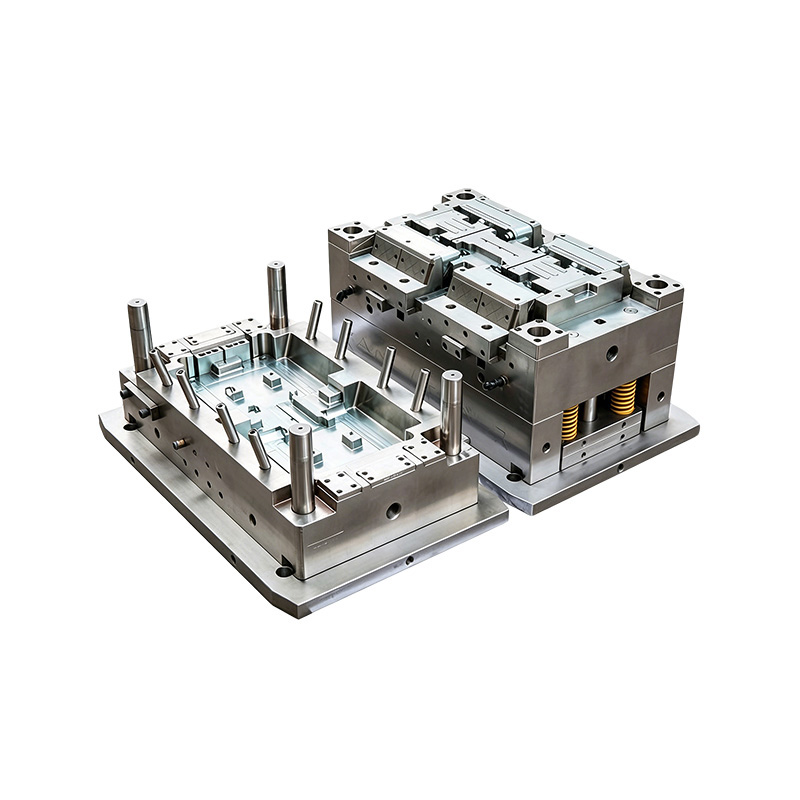
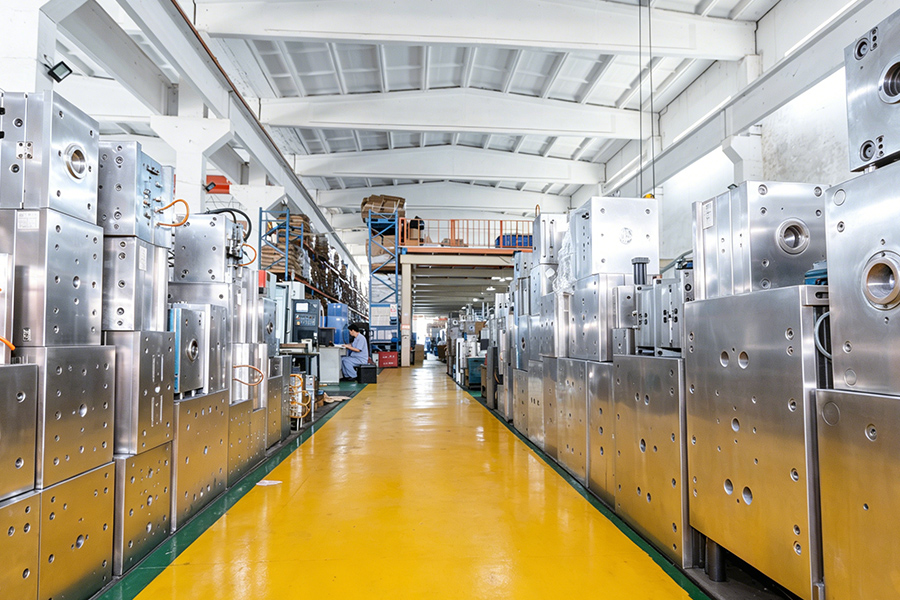
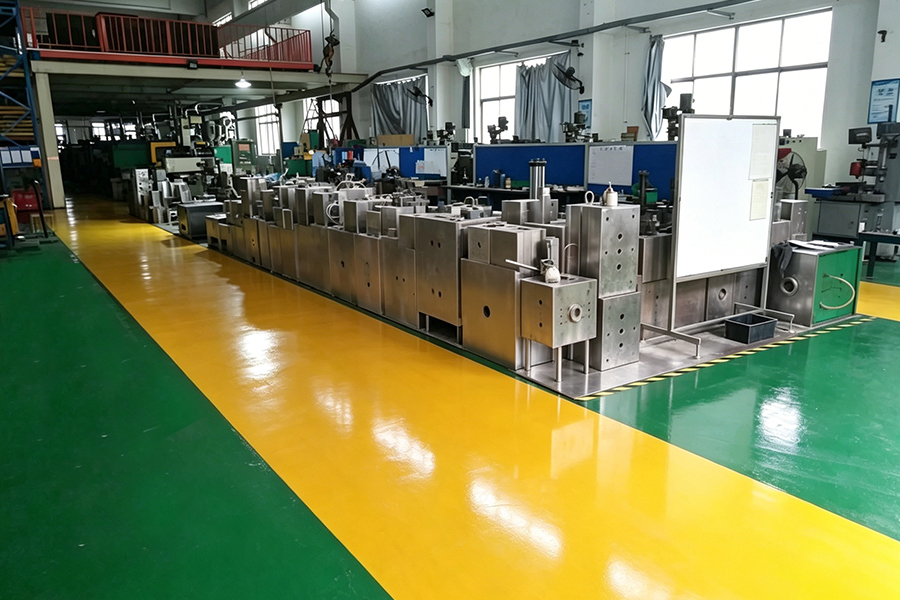
The mold is the part before the part exists. It is machined from hardened tool steel, or from pre-hardened steel or aluminum for short runs. The cavity half forms the outside of the part, the core half forms the inside, and the finish of both surfaces transfers directly to every molded piece. Around the cavity, the mold also carries cooling channels, a runner and gate system, ejector pins, and, when needed, sliding side actions for undercuts.
Multi-material molding extends the same principle. Two-color injection molding fills the cavity with a first material, rotates the mold core, and injects a second material or color into the same part. Cups with two-tone bodies, handles with stiff cores and flexible grips, and two-color toothbrushes are common examples. These molds demand much tighter alignment than single-shot tools because the second shot has to register exactly over the first.
 Two-Color Injection Molds for Cups with Soft-Touch LayersThese molds produce dual-material cups combining food-grade PP or PC with soft TPE or silicone, offering heat resistance, non-slip grip, and customizable textures or logos. Ideal for thermal flasks, sports bottles, and premium gift cups.View Product →
Every part passes through the same four stages: clamping, injection, holding and cooling, and ejection. The sum of these stage times is the cycle time, and cutting it is the most direct route to lower cost per part.
| Stage | What happens | Typical time |
|---|---|---|
| Clamping | The mold closes and the clamping unit builds full tonnage | 1 to 3 seconds |
| Injection | The screw moves forward and melt fills the cavity | 0.5 to 5 seconds |
| Holding and cooling | Holding pressure compensates for shrinkage as the part solidifies | 10 to 40 seconds |
| Ejection | The mold opens and ejector pins push the part out | 1 to 3 seconds |
The holding stage is the one that non-specialists most often underestimate. Plastic shrinks as it cools, so holding pressure pushes additional melt into the cavity to compensate, keeping the final part full and dimensionally correct. Cooling time dominates the cycle because the polymer must become rigid enough to eject without distortion.
Moldability is decided before the mold design is finalized. Five rules prevent most defects: draft every vertical wall by 0.5 to 2 degrees so the part releases cleanly; keep wall thickness uniform so cooling is even; use ribs to stiffen a wall instead of making it thicker; radius inside corners to avoid stress concentration; and place the gate where appearance and stress allow.
Achievable tolerances depend on the material and the mold. Precision molding can hold +/-0.05 mm, but that level of control costs money in steel, processing, and inspection. For most production parts, +/-0.1 mm is a realistic target, and wall thickness between 0.8 and 3 mm is a practical range for standard thermoplastics.
The material data sheet is the starting point for every process setting. Melt temperature, mold temperature, injection pressure, and cooling time are all selected according to the polymer being run. Commodity resins such as PP, ABS, PE, and PS cover most general-purpose parts; engineering plastics such as PA, PC, and POM add mechanical and thermal performance; and high-temperature resins like PEEK and PEI serve demanding medical and electronics applications.
Every polymer has a specific shrinkage value, and the mold cavity is machined to that value. Fillers such as glass fiber also change flow behavior. The mold designer has to account for this before steel is cut.
Most molding defects come from a small set of causes: not enough pressure, uneven cooling, or a gate in the wrong location. The table lists the most common problems and their usual corrections.
| Defect | Typical cause | Corrective action |
|---|---|---|
| Short shot | Melt freezes before the cavity fills | Increase injection pressure, raise melt temperature, add venting |
| Sink mark | Local shrinkage at a thick section | Adjust wall thickness, add ribs, increase holding pressure |
| Weld line | Two melt fronts meet and bond poorly | Relocate gates, raise mold temperature |
| Warpage | Uneven cooling and shrinkage | Balance cooling channels, correct wall thickness variations |
| Flash | Mold faces separate under pressure | Increase clamp force, repair worn parting line |
Defects are not only cosmetic. A weld line on a load-bearing pin inside an electronic connector can become a field failure, which is why serious molders run first-article inspection and record the approved process window before releasing a job for mass production.
Injection molding is the right choice when volume justifies the tooling investment and every part must match the first one. Automotive programs rely on it for dashboards, interior trim, and light housings, where appearance and impact performance are judged on every production vehicle. The range of automotive accessories and interior components produced this way spans functional brackets, decorative panels, and structural bezels that move from concept to series production using the same tool.
Electronics projects use the same process for connectors, LED frames, micro gears, and relay housings, where thin walls and tight tolerances determine whether the part functions at all.
 High-Temperature Electronic Connector Injection MoldsThese molds are designed for LCP and PA9T materials, withstanding 260°C reflow soldering and achieving V-0 flame retardancy. They enable thin-wall, high-density molding for reliable connectors used in 5G, automotive, and medical equipment.View Product →
Medical device manufacturing pushes the process further: syringes, infusion connectors, and test tubes need smooth surfaces, precise dimensions, and controlled handling. Appliances follow the same pattern for robot vacuum housings, air conditioner casings, and refrigerator drawers, where the plastic housing carries both the structure and the brand image.
The quality of a molded product is fixed when the mold is designed, not when the machine starts. A partner with in-house mold design and mold manufacturing can move a project from drawing to tooling to production without handing the most critical step to a subcontractor. For a syringe barrel with a smooth bore or a two-color handle that must align perfectly across two shots, that control changes the outcome.
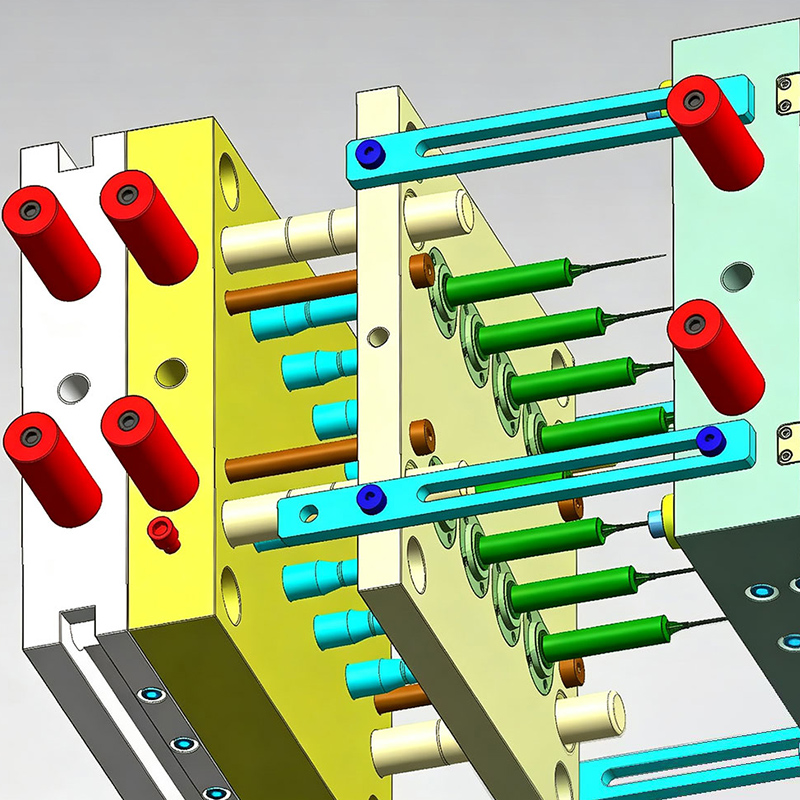 High-Precision Medical Syringe Injection MoldsThese molds produce transparent, thin-walled syringe components from medical-grade PP, PC, or COP/COC, with options for 32- or 48-cavity tooling. They ensure biocompatibility, sterilization resistance, and high-volume efficiency for disposable and pre-filled syringes.View Product →
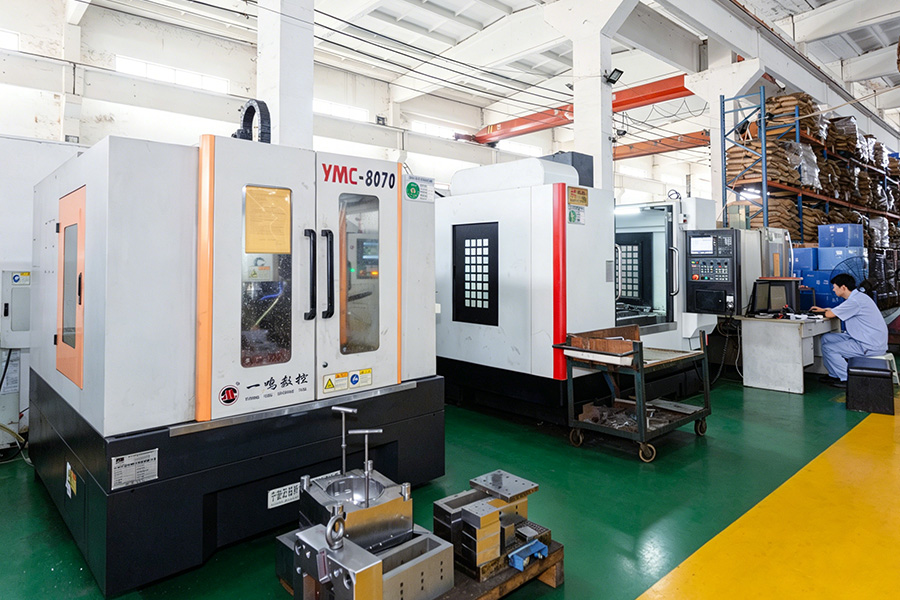
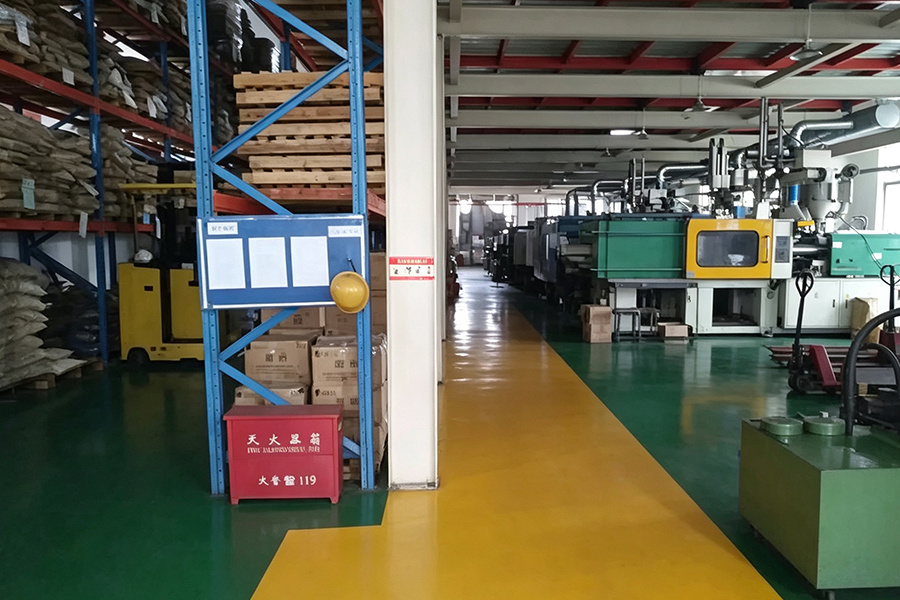
Evaluate capabilities with concrete questions. Does the supplier operate CNC machining, EDM, wire cutting, and precision grinding in-house? How many injection molding machines does it run, and what is the tonnage range? Are mold temperature controllers and automated part handling part of the standard setup?
Regular mold maintenance directly affects part quality and delivery stability. Ask how the supplier schedules mold cleaning, spare-part replacement, and repair before you place the order.
 View More View More
 View More View More View More
 View More

+86-18939901200

+86-021-57800460

shpzsj@163.com

No. 88, Yechang Road, Yexie Town, Songjiang District, Shanghai, China
 Custom Precision Plastic Injection Mold Manufacturers